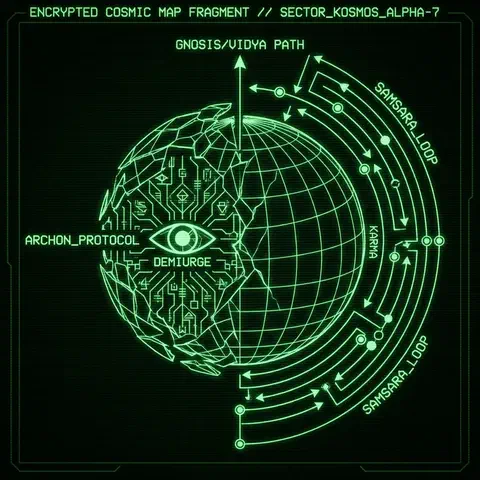
Samsara vs Demiurge
A concise yet rigorous comparison of the Gnostic vision of the cosmos as a carceral construct and the Indian notion of samsara as an endless wheel of rebirth.
~/archive
A concise yet rigorous comparison of the Gnostic vision of the cosmos as a carceral construct and the Indian notion of samsara as an endless wheel of rebirth.
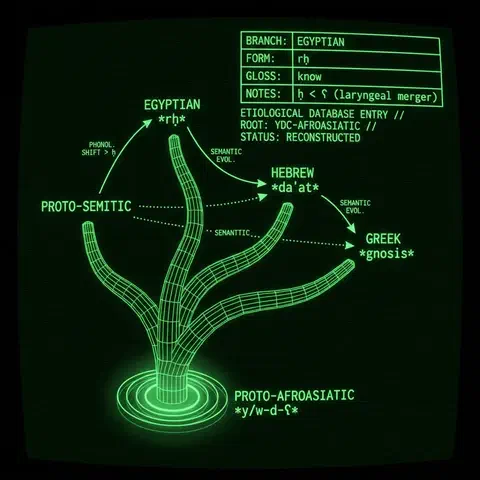
A philological safari that follows the Hebrew word for “knowledge” from a prehistoric Afroasiatic root through Akkadian, Aramaic, and Egyptian detours all the way to the Nag Hammadi codices.
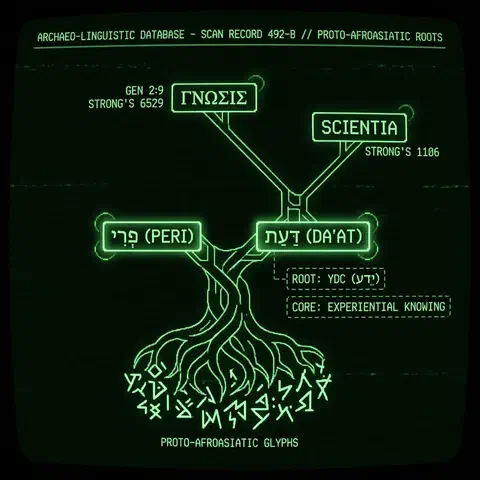
A philological dive into the Hebrew words for “fruit” and “knowledge” in Genesis, how they shift in Greek and Latin, and the later myths they spawned.
How a once‑secret magical philosophy slipped into everyday English, from ‘quintessential’ cocktails to the vacuum‑packed peanuts you bought yesterday.
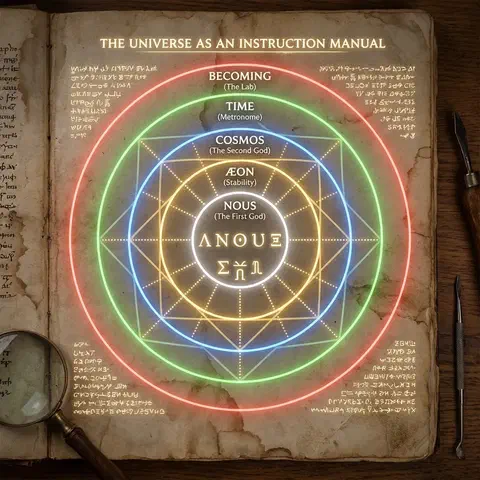
Hermeticism reads the cosmos as a living, self‑transforming image of the Divine—both a classroom and crucible designed to awaken the soul through embodied experience.
Why the English coinage **atonement** eclipsed classical terms like Latin *reconciliatio*, Greek *katallagē*, and Hebrew *kippur*—and what that shift says about Reformation‑era thought.
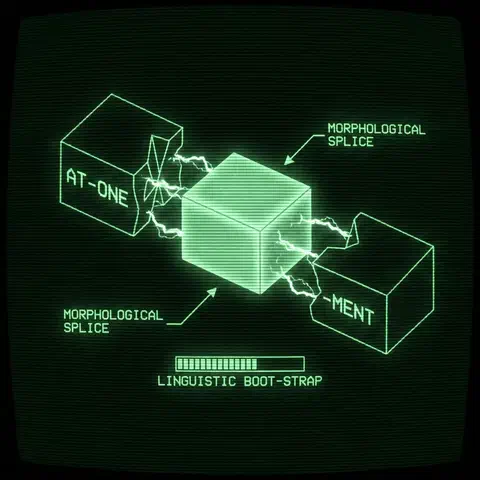
A deep dive into how the word **atonement** grew from the Middle‑English phrase “at one” plus the French‑derived suffix **‑ment**, and what that splice reveals about the youth of English.
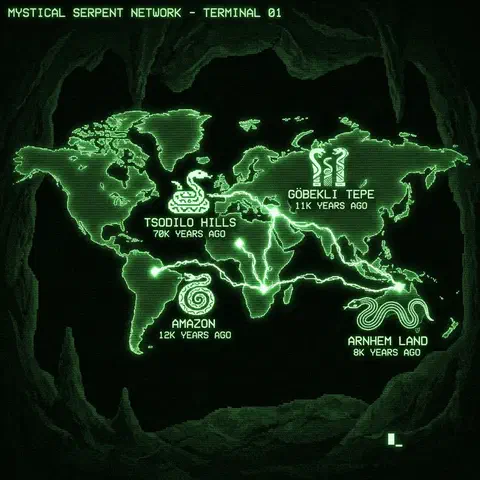
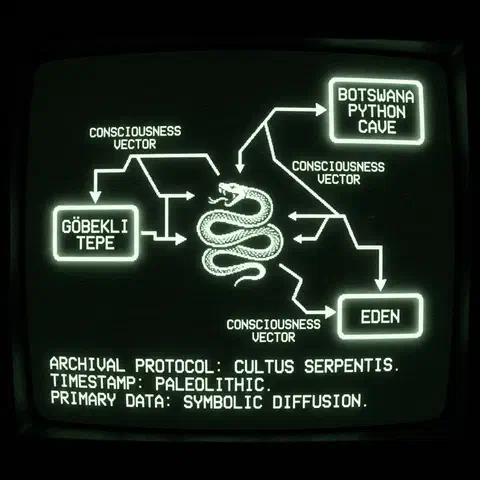
Timeline comparing the earliest known depictions of snakes on each continent, from Tsodilo Hills to Amazon rock murals.
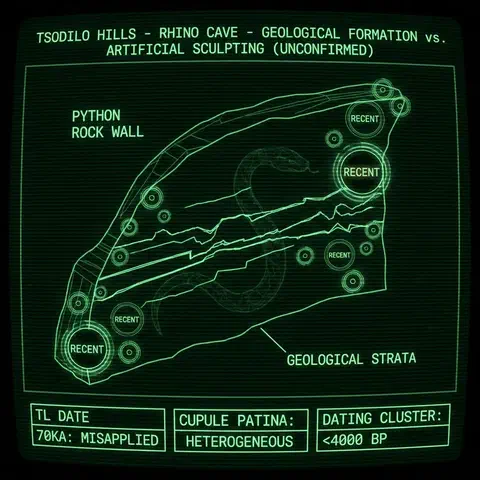
Why the celebrated 'python' carving in Botswana's Tsodilo Hills is almost certainly a geological quirk mis-sold as the world's first ritual.
Integrating Venus figurines, goddess myths, and X-chromosome sweeps to re-evaluate women’s possible leadership in early human culture.
How a simple whirled instrument traces the spread of male secret societies and ritual culture from the Late Paleolithic to the present.
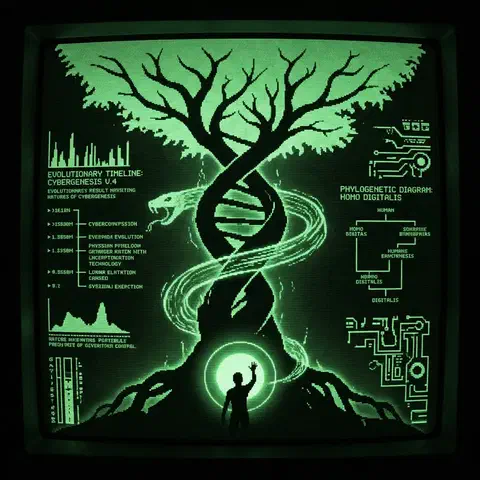
Integrating Darwinian evolution with ancient creation myths to trace the physical and psychological origins of humanity.
Surveying genetic, anatomical, and cultural evidence that humans tamed themselves through "survival of the friendliest."
Exploring how ultra-stable words like pronouns and numerals preserve deep traces of linguistic ancestry across continents.
Do the widespread 1sg *n-/m-* and 2sg *b-/w-* paradigms signal an African macro-family, or are they just the linguistic fingerprints of 12 000 years of contact?
Exploring the hypothesis that the Chinese mother goddess Nüwa preserves a cultural memory of end-Ice Age floods and the dawn of self-aware human consciousness.
How the Soviet Union’s unique mix of ideology and academia produced an outsized cadre of linguists obsessed with linking the world’s languages.
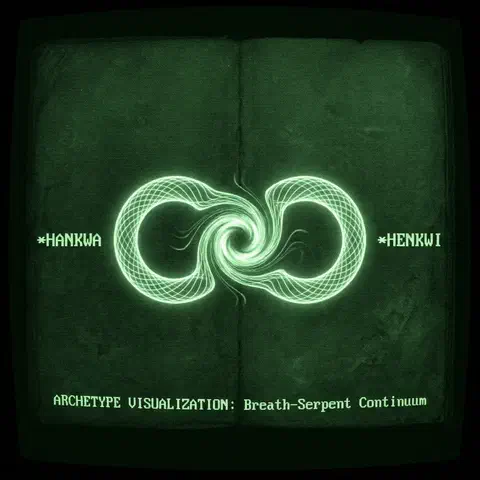
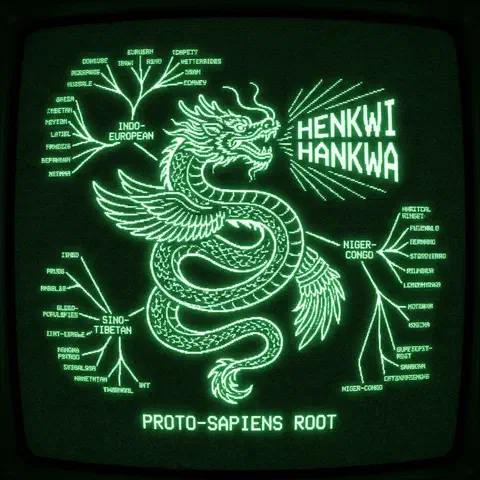
Exploring the hypothesis of two intertwined Proto-Sapiens roots, *hankwa (breath, life, soul) and *henkwi (snake, dragon), by examining proposed cognates across global language families and their …
Commentary on Nicolas Bruneteau’s Proto-Sapiens glossary, focusing on the globally persistent roots *hankwa* (breath, life) and *henkwi* (snake, dragon).
An exploration of ancient Russian and Slavic serpent myths, connecting them to the global archetype of the 'Snake Cult of Consciousness' and the Eve Theory of Consciousness.