Originally published by Vectors of Mind.
Vectors of Mind has been around for two years now, and there’s quite a bit of content that builds on itself. Enjoy this 90 minute monologue where I describe each article chronologically, and give some meta-level commentary.
Show notes #
- Origin: Dissertation in electrical engineering on psychometrics and machine learning
- Used Facebook’s My Personality Dataset with millions of users’ personality tests and Facebook statuses
- Explored transfer learning to predict traits like IQ from limited data
- Dataset closed due to Cambridge Analytica connection
- Shifted focus to fundamental questions about language and personality constructs
- Discovered mathematical equivalence between Big Five derivation and word vectors from the 1930s
- Argues for comparing psychological constructs in word space rather than psychometric space
- Proposes studying personality directly in linguistic space without creating new scales
- Example: Comparing altruism and openness to experience using word vectors
- Critiques traditional method of creating separate scales and correlating them
- Suggests possibility of doing personality science directly in word space without surveys
- Exercise in naming and interpreting factors derived from lexical studies
- Reflects on the process of identifying personality factors from data
- Compares to original Big Five researchers’ process of naming factors
- Mentions people in comments did well at guessing factors
- Discusses the first unrotated factor in personality models
- Connects to evolutionary psychology and theory of mind
- Argues this factor is about considering others and modeling their desires
- Relates to the concept of living the golden rule
- Introduces idea of factor as map of societal pressure
- Explores how reciprocal altruism might have produced “voices of the gods”
- Introduces Julian Jaynes’ ideas on bicameral mind
- Speculates on proto-language of superego before full language
- Connects to the concept of conscience evolving over time
- Proposes “I am” as the first recursive thought
- Suggests women were vanguard of consciousness development due to evolutionary roles
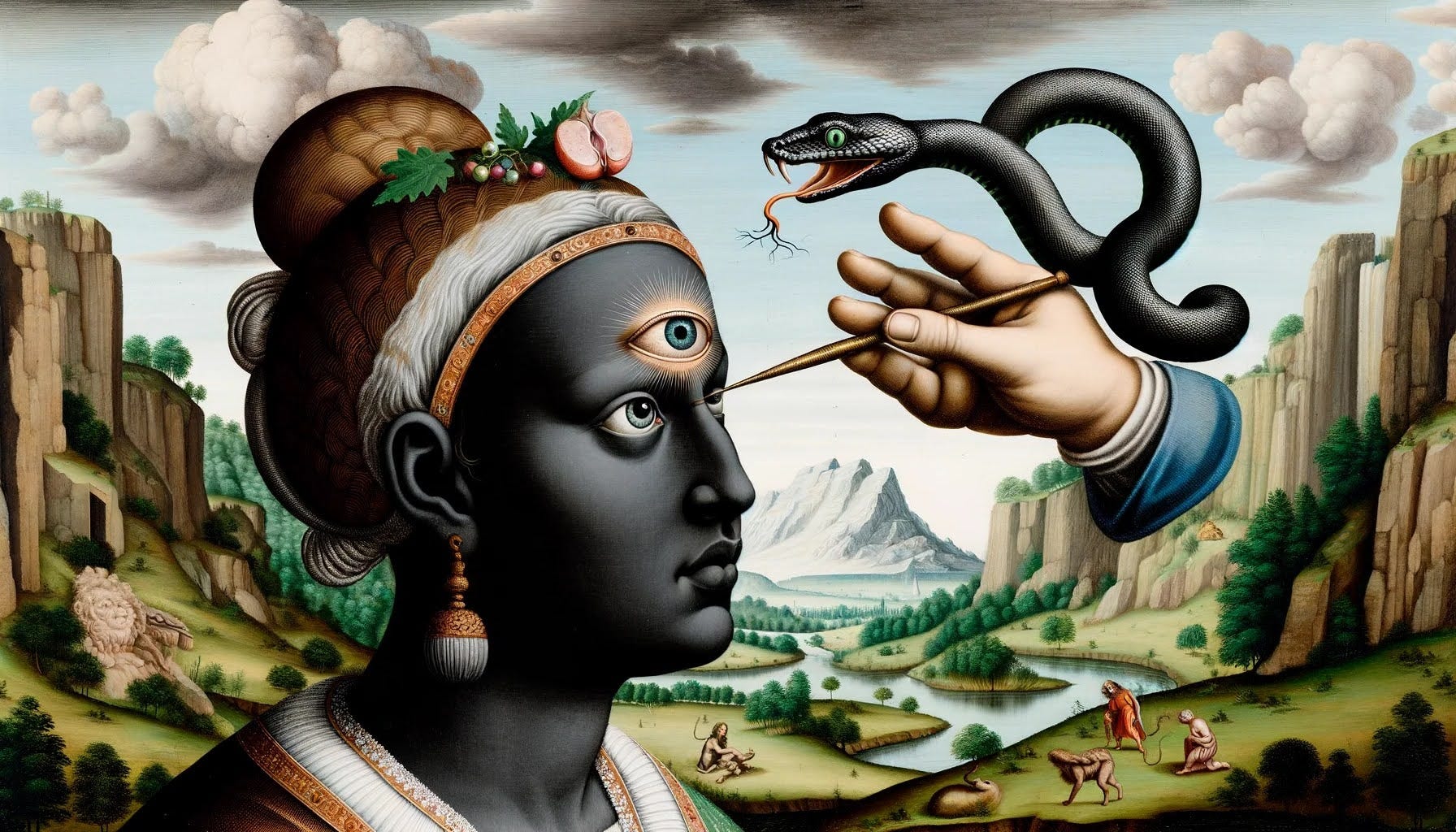
- Connects to Genesis and other creation myths
- Discusses potential timeline for development of self-awareness
- Explores role of psychedelics in precipitating self-awareness
- Explores snake symbolism in creation myths worldwide
- Hypothesizes snake venom as an entheogen in early consciousness rituals
- Discusses pharmacological properties of snake venom and potential psychoactive effects
- Connects snake myths to development of agriculture
- Mentions reception on Reddit and by Scott Alexander
- Provides more evidence for people getting high on snake venom
- Discusses known effective antivenoms
- Investigates pronoun similarities across languages
- Argues for recent spread of self-awareness concepts
- Critiques theories proposing very ancient origins for pronouns
- Discusses work by linguist Merritt Ruhlen on global pronoun similarities
- Comparative study of personality factors across English, Spanish, French, Russian, Turkish, Persian
- Describes it as better than most papers in personality psychology
- Notes it received little attention on Substack
- Experiment asking ChatGPT to fill out personality inventories
- Conducted in chat window without using API
- Received more attention than the cross-cultural personality study
Deja-you, the recursive construction of self
- Explores the concept of recursion in relation to consciousness and self-awareness
- Discusses how often recursion comes up in theories of consciousness and language
- Mentions Douglas Hofstadter’s “I Am a Strange Loop” and its focus on recursion
- Reflects on the paradox of consciousness and its connection to recursion
- Explores the idea of “I am” as potentially the first recursive thought
- Discusses how this connects to the broader Eve Theory of Consciousness
- Explores various theories about the timeline of recursion evolution
- Discusses early dates for recursion, going back as far as 2 million years ago
- Mentions the concept of the “Uncanny Valley” in human evolution
- Reflects on the challenges of pinpointing when recursive thinking emerged
When did recursion evolve? (part 2)
- Covers theories about recursion emergence from 200,000 years ago to present
- Discusses Noam Chomsky’s theory of a single mutation enabling recursion
- Explores the concept of Behavioral Modernity and its timeline
- Mentions the Sapient Paradox and debates about when fully human behavior became widespread
Eve Theory of Consciousness v2
- Updated version focusing on gendered evolution of recursion
- Emphasizes sex dynamics and recursion more than previous version
- Discusses genetic evidence potentially supporting the theory
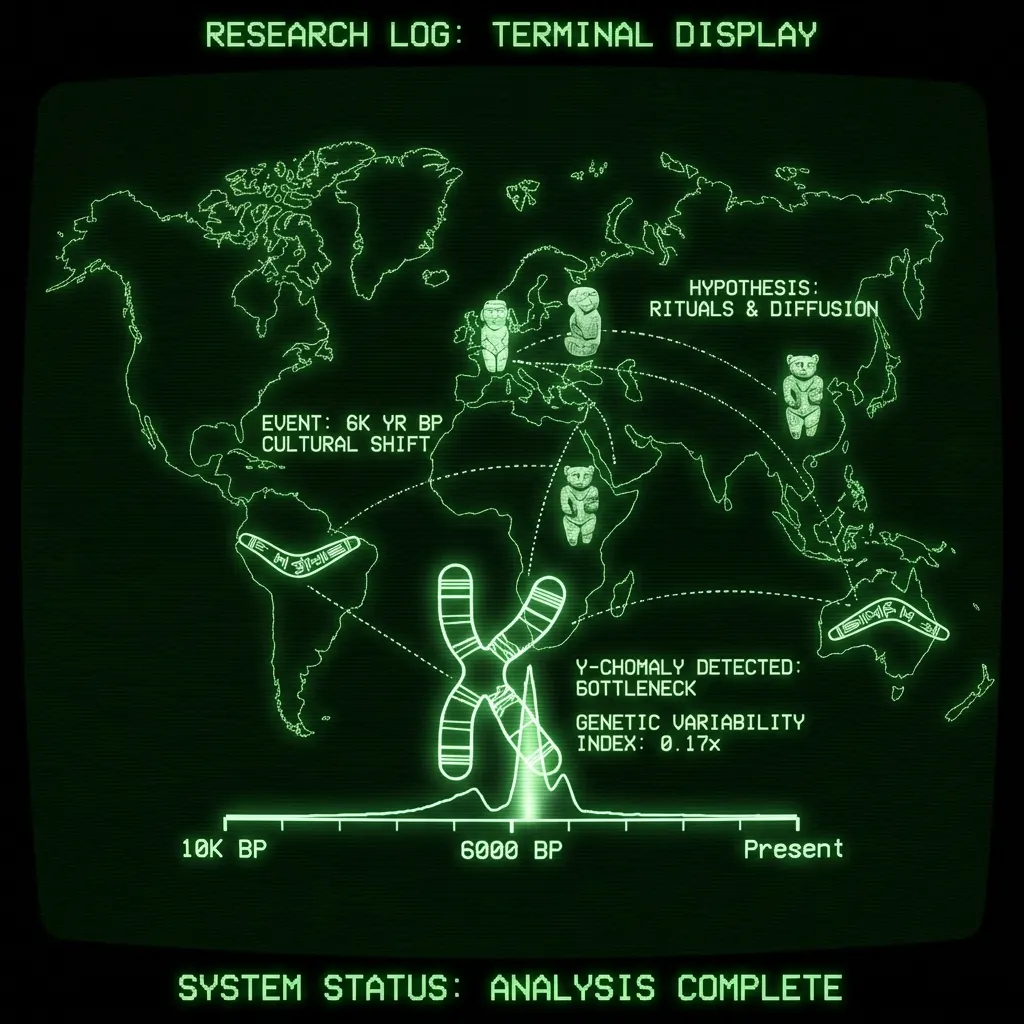
- Mentions 17 times less variability in Y chromosome compared to X chromosome 6,000 years ago
- Reflects on how this fits with Eve Theory of Consciousness
The AI basis of the Eve Theory of Consciousness
- Similar exercise as the podcast, showing how questions about language and personality eventually led to the Eve Theory of Consciousness
The Immortality Key forgets that Jesus was Jewish
- Argues Brian Muraresku’s book downplays the Jewish continuity between the Old and New Testament
- Argues against the idea that stories can last 100,000 years
- Argues that the mystery of recursion and sapience is related to selection on the primary factor of personality
- States that the primary factor or general factor of personality is correlated about 0.9 with emotional intelligence
- Suggests that emotional intelligence is at the heart of human intelligence
Evidence for global cultural diffusion
- Examines evidence for worldwide cultural spread
- Discusses snake myths, the Seven Sisters of the Pleiades, and bullroarers
- Uses dog domestication as an example of proven cultural diffusion
Why did male initiation rituals diffuse globally?
- Discusses research into male initiation rituals across cultures
- Suggests this could be related to the Y chromosome bottleneck
- Proposes that geneticists studying the Y chromosome bottleneck should consider these rituals
Eve Theory of Consciousness v3.0
- Comprehensive 100-page explanation of the fully developed theory
- Described as best work, setting up language to explain other directions
- Reflects on theory’s consistency and development over time
Herakles, Adam, and Krishna were initiated in the snake cult at Göbekli Tepe
- Connects mythological figures to proposed snake cult rituals
- Discusses astronomical significance, particularly the constellation Hercules
- Speculates on ritual elements at Göbekli Tepe
Archeologists vs Ancient Aliens
- Critiques both archaeological conservatism and ancient alien theories
- Discusses potential connections between Australian Aboriginal and Near Eastern cultures
- Reflects on academic reluctance to consider diffusion theories
- Mentions bullroarer findings at Göbekli Tepe
- Explores the “squatter” figure in ancient art across cultures
- Mentions finding this figure in various contexts, including Great Lakes rock art
- Examines potential connections between Genesis and the Symbolic Revolution
- Discusses professional risks for archaeologists in exploring these connections
- Mentions Göbekli Tepe’s FAQ addressing biblical connections
- Explores Armenian folklore connecting snakes to medicinal knowledge
- Questions why snakes are associated with medicinal knowledge in many cultures
- Recap of presenting the Snake Cult theory at a LessWrong conference
- Mentions receiving negative questions, particularly about Australian connections
- Broader application of Eve Theory to explain the Sapient Paradox
- Discusses alternative explanations for the spread of human cognition
- Aims to make the theory more palatable without snake cult specifics
- Comprehensive history of the bullroarer in various cultures
- Argues for cultural diffusion based on bullroarer similarities
- Describes it as best resource on bullroarers available
- Reflects on academic neglect of bullroarer research
- Critiques the book’s timeline for the evolution of religion
- Discusses challenges in dating cognitive and cultural developments
- Notes the book’s tendency to push important developments far into the past
- Discusses recent genetic evidence for cognitive evolution
- Reflects on how this might support or challenge the Eve Theory
- Mentions David Reich’s recent interview and preprint
- Explores Efe creation myths from the Congo
- Discusses similarities to Genesis and implications for consciousness theories
- Expresses surprise that Jaynesian researchers haven’t found this myth