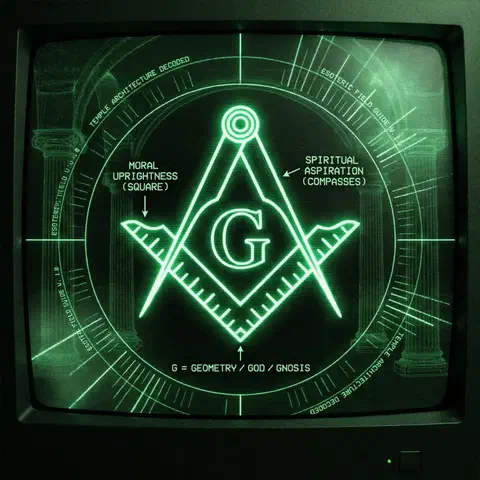
Square, Compasses, and the Letter G: What the Masonic Emblem Means and Where It Came From
What the Masonic square and compasses and the letter G mean, where they came from in medieval stonemasonry, and what older geometry they do and do not inherit.
~/archive
What the Masonic square and compasses and the letter G mean, where they came from in medieval stonemasonry, and what older geometry they do and do not inherit.
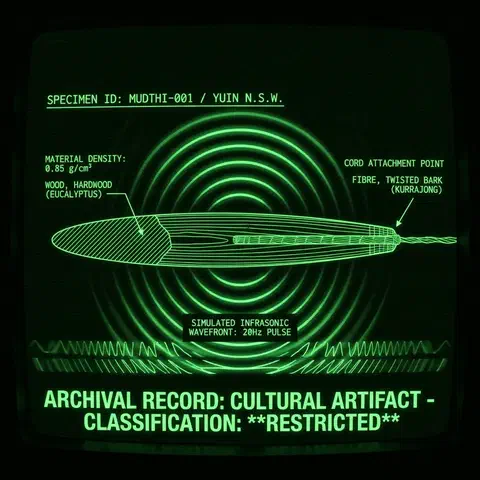
Comparative, primary-source survey of the bullroarer across Aboriginal Australia—regional names, mythic agents, rites, taboos, and symbolism—with analysis and EToC mapping.
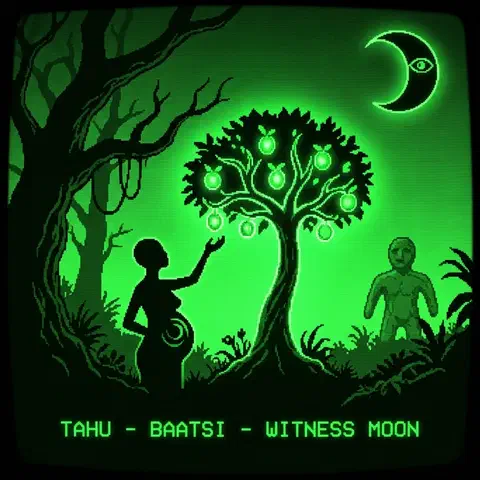
A close reading of Efé (Ituri Pygmies) creation/‘origin of death’ cycles—Baatsi and the Tahu taboo, Masupa/Tore’s withdrawn arm—mapped to Genesis and EToC.
What Darwin actually said about early human social order—monogamy, polygyny, polyandry, ‘communal marriage,’ matriliny, time depth, and gene–culture feedback—with primary-source quotes.
Comparative, primary-source survey of the bullroarer’s functions across Aboriginal Australia, mapped to Eve Theory of Consciousness constructs.
Primary‑source account of Baiame as sky‑lawgiver and Daramulan at Gamilaraay/Wiradjuri bora/burbung, with quotations, tables, and an EToC‑aligned analysis.
A neutral field guide to the most-cited Old‑World inscriptions, coins, and curios said to predate Columbus in the Americas—with sources, context, and who still argues for them.
An in‑depth reading of Algonquin/Anishinaabe origin‑of‑humans myths—Original Man, Earth‑Diver, and Flood—mapped to EToC’s claim that creation stories encode the birth of the self.
Survey of African flood myths by region, with annotated sources, motif analysis, and diffusion/selection arguments for specialists in comparative mythology.
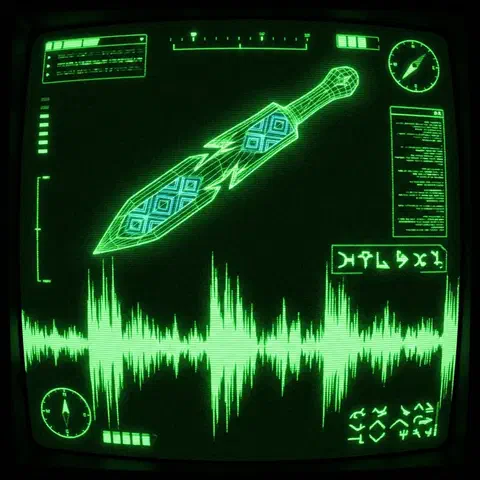
Exhaustive profile of the Navajo clown-deity Tó Nilt'į́į́h — also glossed as Tsénilyáʼí — and his signature instrum ent, the bull-roarer (tsin ndi'ni').
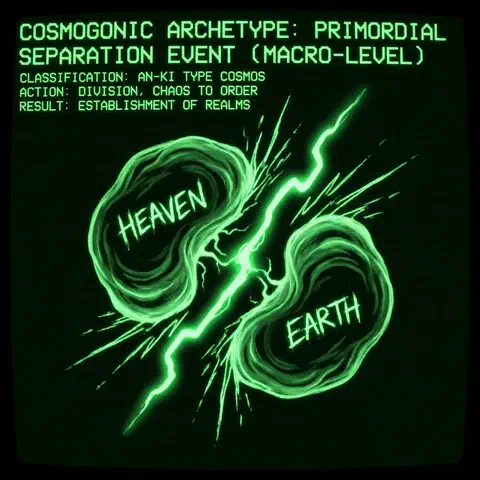
A comprehensive exploration of the mythic motif of Heaven and Earth being severed or separated, as seen in ancient Hurro-Hittite epics and other world creation myths.
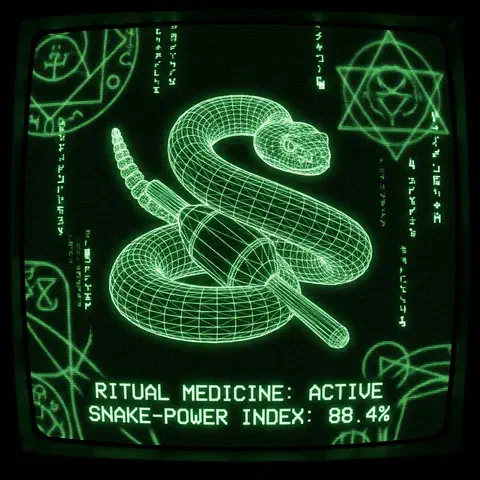
How the Navajo bull-roarer (tsin ndi'ni') is charged with ritual medicine and embodies Snake-power in the Big Star Chant, including connections to rattlesnake blood in arrow poison formulas and …
How a child-god’s fatal toy became a philosophical symbol for embodiment, matter and selfhood—from Neoplatonists to today’s classicists.
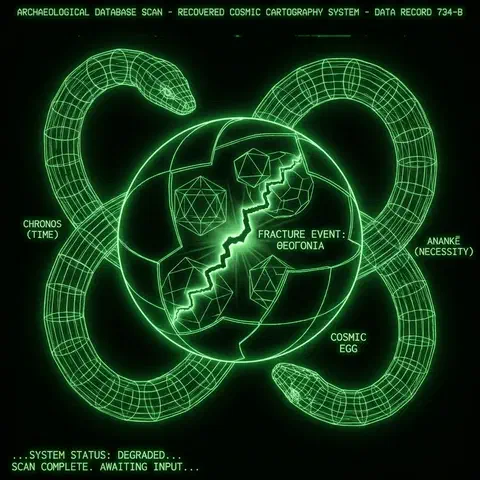
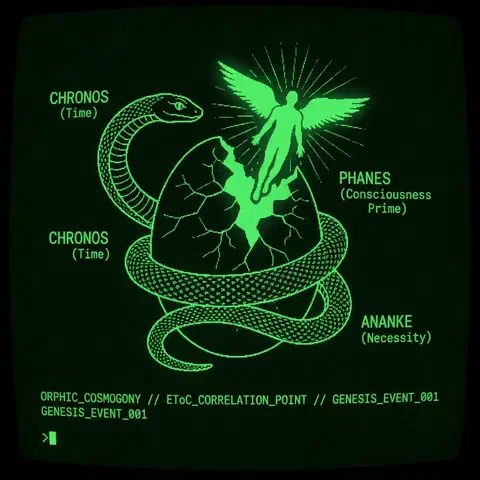
Orphic cosmogony sorted out: four theogonies, serpent Time and the cosmic egg, Phanes, Zeus swallowing creation, and the disputed Zagreus myth.
A comparative look at the Orphic creation myth and Andrew Cutler's Snake Cult/Eve Theory of Consciousness, highlighting shared motifs of serpents, cosmic eggs, and female-led awakenings.
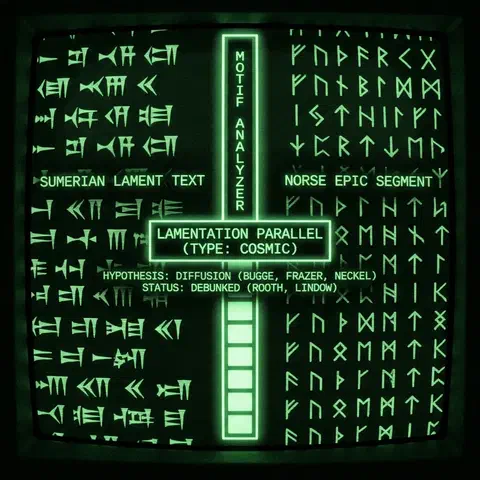
A brisk review of scholars who claim the Norse cosmos‑weeps motif comes from the Mesopotamian Tammuz cult—and why most specialists now disagree.
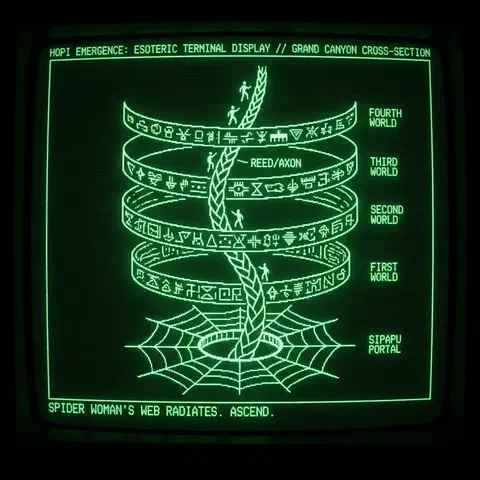
From Hopi sipapus to Andean caves, New‑World creation stories mirror the moment ‘Eve’ first looked back at herself.
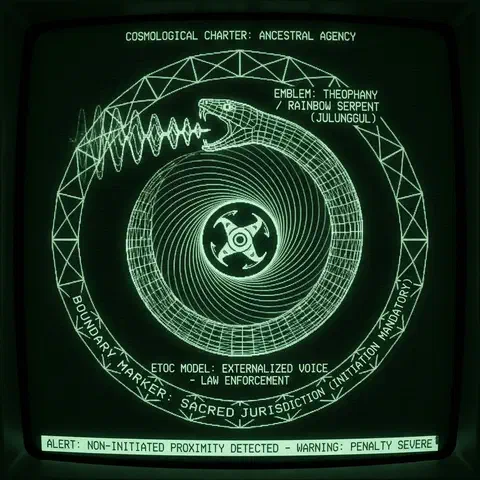
How Dreaming narratives—Djanggawul, Wawalag Sisters, Rainbow Serpent—encode a prehistoric shift toward self‑aware, language‑driven culture.
How classic Yoruba, Vodun, Zulu, Bushongo, and Dogon creation stories echo the Eve Theory of Consciousness: female catalysts, serpent motifs, and liminal waters.
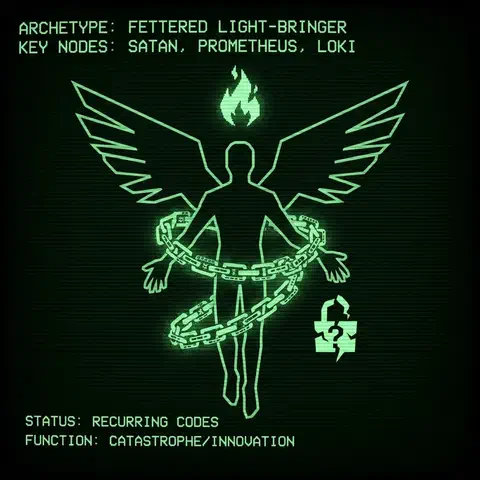
Tables & citations showing how scholars slot Lucifer beside Loki, Prometheus, and other bound rebel‑gods.