Ten Papers that Push the Eve Theory of Consciousness Toward Science
Ten recent genetics and neuroscience papers that quietly support the Eve Theory of Consciousness: selection on language, psychosis, and the human self.
~/archive
Ten recent genetics and neuroscience papers that quietly support the Eve Theory of Consciousness: selection on language, psychosis, and the human self.
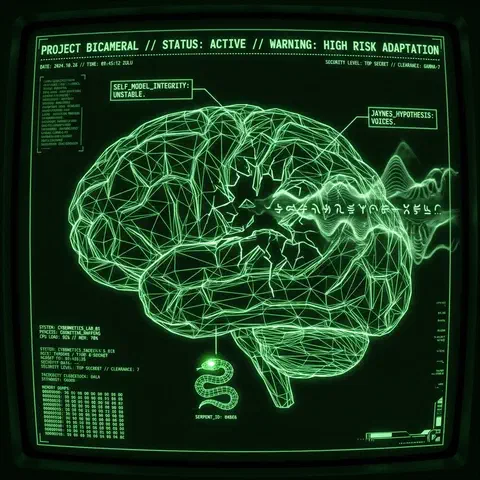
Explores whether schizophrenia-like states were once common, connecting psychosis, language, ancient DNA, and the evolution of consciousness.
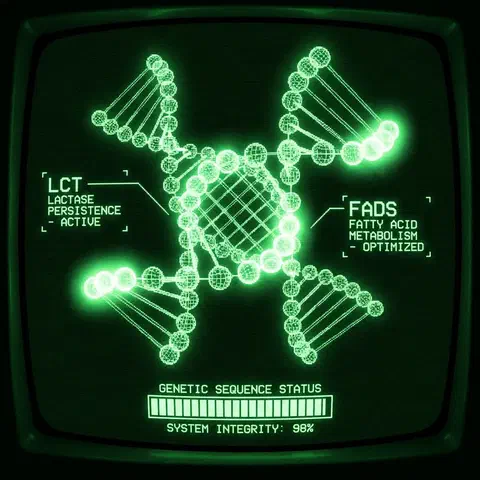
Ancient DNA, polygenic scores, and psychiatric genetics all say the human mind has evolved dramatically since the Ice Age—contra the 50,000-years myth.
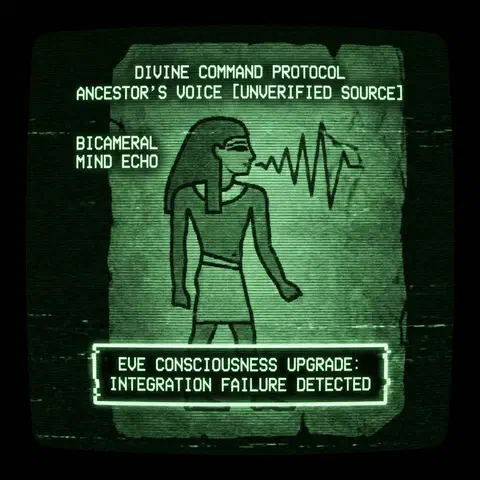
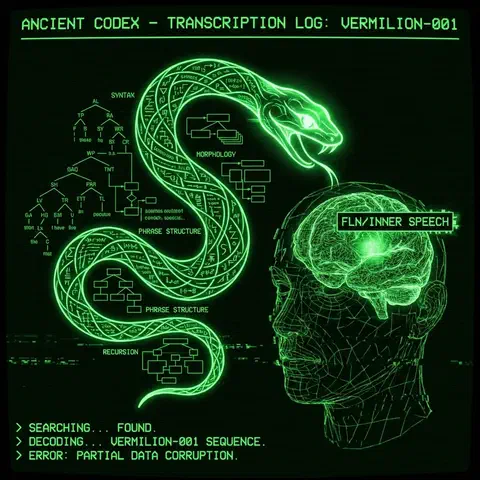
How recursive language, FOXP2, and fast-evolving regulatory DNA turned Golden Man’s mythic world into Eve’s self-conscious Garden exile.
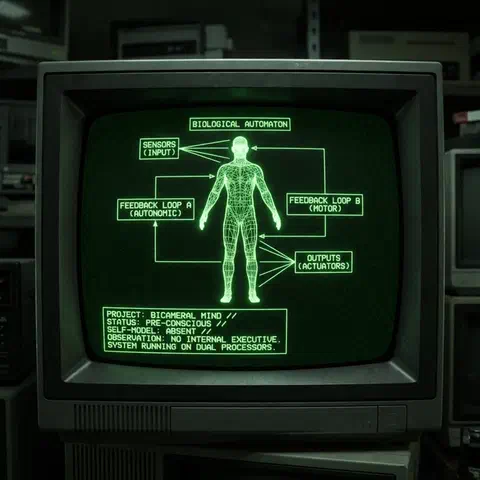
Before introspective consciousness, humans were control systems without a narrative self. This essay reconstructs Golden Man using cybernetics, animal cognition, and Eve Theory of Consciousness.
The Mistress of Serpents Goes North
God, Physics, and the Meaning of Beauty
A speculative exploration of ancient 'fallen angel' myths through the Eve Theory of Consciousness, suggesting a bygone age when men lacked modern self-awareness while women led the way.
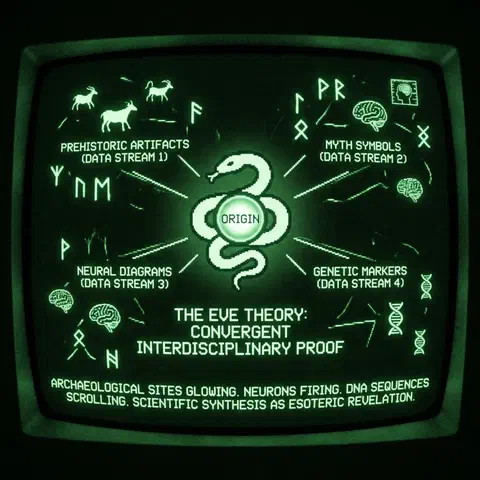
Fresh interdisciplinary evidence – from prehistoric rituals and myth to genes and neurochemistry – supports the Eve Theory of Consciousness, which posits women-led serpent venom rites ignited human …
Exploring mystical traditions of the divine spark within humanity and their connection to the Eve Theory of Consciousness.
Exploring how the Eve Theory of Consciousness connects to mystical traditions of the divine spark within humanity.
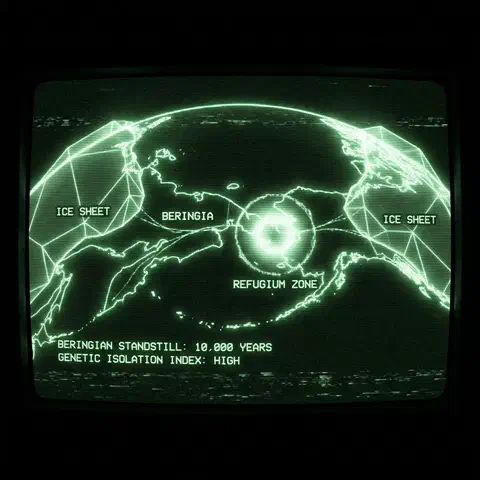
What Beringian toolkits and genomes reveal about two-way movements between Siberia and the Americas—from Dyuktai microblades to toggling harpoons and back-migrations.
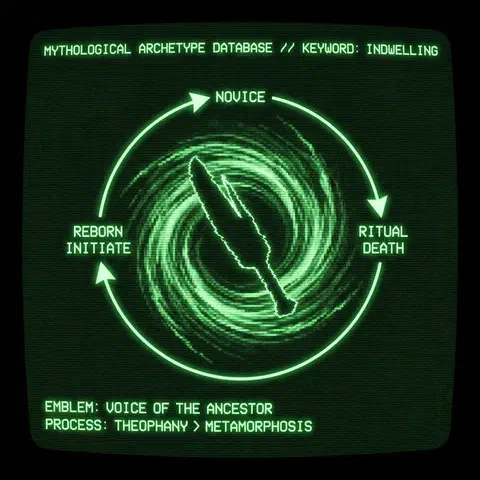
Across Australia, West Africa, Greece, and Amazonia, the bullroarer marks initiation as literal spirit indwelling—ritual death, rebirth, and presence of the god or ancestor.
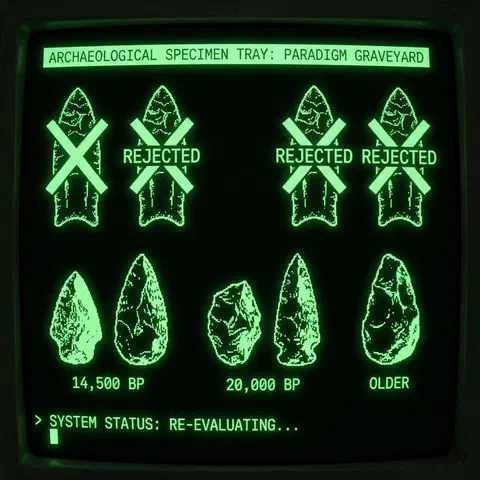
A forensic tour of mid-20th-century pre-Clovis claims—what was alleged, how it unraveled, and what finally cracked the Clovis-first orthodoxy—for readers tracking the peopling of the Americas.
Reconstructing teotlaqualli as a skin-delivered entheogen—tobacco, ololiuhqui, and ‘venom-ash’—with testable pharmacology grounded in Nahua sources and modern dermal science.
Survey of textual clues and modern hypotheses that ancient mystery cults may have used snake venom in controlled rites, with sources and cautions.
A sharp comparison of Inanna, Persephone, and Xquic with Dumuzi, Adonis, Osiris, and Telepinu—pinpointing which ritual and seasonal functions specifically track female agency.
Do dragon-slaying and flood-control myths encode a deep, Paleolithic schema about taming water? Comparative myth + paleoclimate with testable predictions.
A crisp, source-heavy comparison of world‑egg cosmogonies and their serpent binders—Orphic, Vedic, Chinese, Finnish—to test whether a deeper shared structure sits beneath the oviform surface.
EToC and Suddendorf–Corballis converge: human recursion and autonoetic time-travel coalesced over the last 100k years, leaving archaeological and mythic fingerprints.