TL;DR
- A new Nature paper sequences 28 Holocene-era individuals south of the Limpopo and finds that pre–~1,400 cal BP genomes sit outside the variation of present-day humans, including Khoe-San, implying substantial “missing” ancient ancestry in modern southern Africa (Jakobsson et al., 2025).
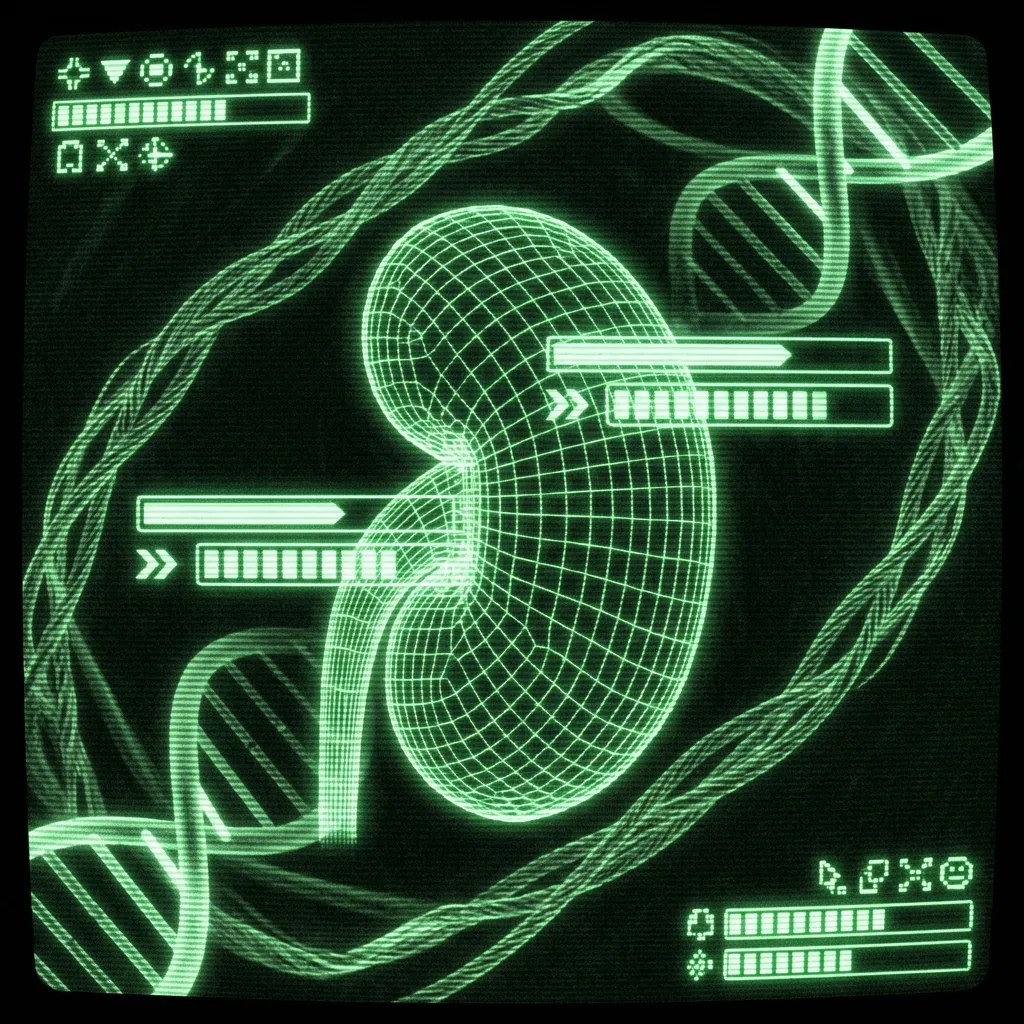
- The authors highlight enrichment of fixed, amino-acid–altering Homo sapiens variants in genes linked to kidney function—suggesting strong selection on water balance along the sapiens lineage (Jakobsson et al., 2025).
- None of that, by itself, adjudicates the deeper philosophical/biological question: whether “being human” tracks anatomy, ancestry, or a cognitive-cultural regime (language + cumulative symbolic culture).
- The genomic pattern is also consistent with scenarios involving a very divergent African lineage that later admixed into (or was replaced by) populations ancestral to present-day southern Africans—without requiring that this lineage had modern cognition.
- Progress likely requires fusing ancient DNA with archaeology and more cautious genotype→phenotype work (including polygenic approaches where appropriate), while remembering where such tools can mislead (Sohail et al., 2019).
“Species” is an index card humans file reality into; evolution is the messy archive.
— Paraphrase of a sentiment common in evolutionary biology; no single canonical source.
What the paper actually shows (and why it matters)#
Jakobsson and colleagues report whole-genome sequencing from 28 ancient individuals from South Africa dating to ~10,200–150 calibrated years BP, spanning Later Stone Age and Iron Age contexts (Jakobsson et al., 2025; methods and extended analyses in the supplement). The headline result is stark:
- Individuals older than ~1,400 cal BP have genomes that are outside the range of genetic variation observed in present-day humans, including Khoe-San populations—though some modern Khoe-San retain a high fraction (reported up to ~80%) of ancient southern African ancestry (Jakobsson et al., 2025).
- Over ~9,000 years, these ancient genomes show little spatiotemporal stratification within the region, consistent with a large, relatively stable Holocene population; then, after ~1,400 years ago, inward gene flow becomes prominent, aligning with historical-era population movements (Jakobsson et al., 2025).
This is not a trivial tweak to the African story. It strengthens a view already argued on broader grounds: that deep population structure across Africa—subdivided populations exchanging genes over long spans—complicates any single-origin, single-dispersal narrative (Scerri et al., 2018). It also extends a lineage of results from southern African ancient DNA showing surprisingly deep divergences and later admixture events (Schlebusch et al., 2017).
So far: solid and important.
The seductive “kidney hypothesis,” and what it can (and cannot) mean#
The paper emphasizes an enrichment signal: Homo sapiens-specific amino-acid–altering variants fixed in all humans are enriched for genes associated with kidney function, and the authors interpret this as evidence for rapid adaptation in water retention physiology on the sapiens lineage (Jakobsson et al., 2025).
Two clarifications keep the narrative honest:
Enrichment is not essence. A statistically enriched category is not a claim that kidneys are “what made us human.” It is a claim that, among a particular subset of variants (fixed, amino-acid–altering), kidney-related genes appear more often than expected. That can be true while the central human niche remains primarily cognitive.
The genomic “action” is rarely confined to a few coding changes. A classic point in comparative genomics is that major species differences often arise through changes in gene regulation and networks rather than protein-coding substitutions (King & Wilson, 1975). Brain-relevant differences, in particular, look sprawling: transcriptomic and regulatory divergence across development, cell types, and circuits rather than a handful of “brain genes” flipping from 0→1 (Sousa et al., 2017).
None of this refutes selection on kidneys. In fact, thermoregulation and water economy are plausibly foundational for a hot, mobile primate that forages in open habitats, persisting with endurance, sweating, and daytime activity—traits often argued as key to the genus Homo (Bramble & Lieberman, 2004). But foundational is not synonymous with defining.
A species can be “engineered” by constraints (kidneys, sweat glands, pelvis geometry) while being ecologically defined by what it does—humans’ odd specialization in socially transmitted knowledge, tools, norms, and symbolic coordination. Steven Pinker’s “cognitive niche” framing captures this: humans survive by reasoning and by culturally accumulated information, not by claws or speed (Pinker, 2010).
The kidney signal is interesting; it is not a metaphysical verdict.
Why treating the ancient lineage as a “sapiens branch” is a choice, not a deduction#
The paper’s language tends to keep the divergent southern African ancestry within Homo sapiens—a deep branch of us. That is defensible under one common usage: “sapiens” as a clade defined by ancestry and gene flow, not by a specific cognitive profile.
But that usage is not compulsory.
Three different “humans” hiding inside one word#
| Sense of “human” | Operational criterion | What the paper strongly supports | What it does not decide |
|---|---|---|---|
| Phylogenetic human | Member of a lineage ancestral to living humans | Deep, regionally structured ancestries feeding into today’s populations | Where to draw species boundaries in a reticulated (interbreeding) tree |
| Anatomical human | Fossil morphology consistent with H. sapiens | Compatibility with long African structure models; does not hinge on one origin | Whether the divergent lineage had “modern” skeletal diagnostics |
| Behavioral/cognitive human | Language + cumulative symbolic culture (archaeologically visible, unevenly) | Nothing directly—genomes are silent on symbolic regimes absent context | Whether a given lineage had modern language, theory of mind, or cumulative culture |
If “Homo sapiens” means “part of the braided ancestry that leads to present humans,” then yes: the ancient southern African lineage can be filed as “sapiens.” But if “Homo sapiens” is supposed to denote a package including modern cognition and symbolic culture, the inference is far weaker—because genomics alone does not specify that package.
The problem is not that the paper is “wrong.” It’s that readers smuggle in an unspoken equivalence: deep ancestry = modern mind. That equivalence is not entailed.
A plausible alternative story that fits the same genetic facts#
Here is a counter-model that is genomically consistent with the paper’s findings, without requiring the divergent lineage to be cognitively modern:
- Africa as a long-lived metapopulation: multiple populations with intermittent connectivity over hundreds of thousands of years (the “structured stem” family of models) (Scerri et al., 2018).
- One or more lineages become extremely divergent—through long isolation, drift, local selection, and perhaps limited gene flow with other African groups.
- Later admixture and replacement events reshape the region within the last ~2,000 years, leaving modern groups as varying mixtures of ancient southern African ancestry and later incoming ancestries (Jakobsson et al., 2025).
- Cognitive modernity emerges late and spreads unevenly, primarily through cultural diffusion and demography, not through a single “cognition mutation.” (This is compatible with the idea that key cultural transitions are patchy and asynchronous in the archaeological record, even within Africa.)
- Therefore the divergent lineage could have been “human” by ancestry and inter-fertility, yet not “human” in the strong cognitive-cultural sense.
This looks less like a clean branching tree and more like what hybridization researchers call a braided stream: divergence plus intermittent gene flow, with “species” boundaries fuzzy in practice (Ackermann et al., 2019).
A useful analogy: Denisovan ancestry in Oceania reflects multiple contacts with distinct Denisovan lineages and possibly surprisingly late introgression episodes—complexity without a tidy taxonomy (Jacobs et al., 2019). If archaic contact can be that messy outside Africa, it is not absurd to suspect deep messiness within Africa—especially given “ghost” archaic admixture signals inferred in some African populations without reference genomes (Durvasula & Sankararaman, 2020).
The paper argues that certain patterns are “not driven by a deeper partial archaic admixture event.” That may be correct for specific models tested (and the supplement should be read closely on exactly what was ruled out). But a broad class of “very divergent lineage + later mixing” scenarios can survive many such tests, because the boundary between “deep structure within sapiens” and “archaic introgression into sapiens” is partly semantic and partly limited by what demographic models are identifiable from available data.
The archaeology problem: “300,000 years old” does not equal “behaviorally modern”#
The paper’s genomic timescales—deep lineages, ancient divergences—invite a familiar rhetorical slide: if our lineages are that old, then “we” are that old.
But “we” in the behavioral sense is not so easy to push backward.
There is evidence for symbolic or proto-symbolic behaviors well before 70,000 years ago—engraved ochre and pigment technologies at Blombos, for example (Henshilwood et al., 2002; Henshilwood et al., 2011). Meanwhile, the emergence of anatomically early H. sapiens around ~300,000 years ago is anchored by fossils such as Jebel Irhoud (Hublin et al., 2017).
So the real point is not “there was no symbolism earlier.” The point is this:
- Symbolic evidence is sparse, contested, and unevenly distributed across time and space.
- Cumulative symbolic culture (the kind that transforms niches, ratchets technology, and scales coordination) looks like a regime shift rather than a single date stamp, and may depend on demography, connectivity, and ecology as much as on genetics.
Even Neanderthals complicate any clean mapping from “species label” to “symbolic mind.” Claims of Neanderthal cave art and other symbolic behaviors exist and are debated, including uranium-thorium dating arguments for Iberian cave art older than modern-human arrival (Hoffmann et al., 2018) and critical responses emphasizing methodological uncertainties and archaeological context (e.g., Lorblanchet, 2020). The lesson is not “Neanderthals were modern” or “Neanderthals were not.” The lesson is: cognition is not taxonomically obedient.
Ancient genomes can reposition lineages. They do not, on their own, tell when a particular cognitive-cultural regime became stable and ubiquitous.
Why “the brain is the special sauce” remains the default hypothesis (without turning it into dogma)#
A sober view gives two simultaneous truths:
- Many bodily systems mattered: bipedalism, thermoregulation, endurance, diet, life history, immunity, and yes—kidney physiology. Some of these are plausibly visible in strong selection signals because they involve survival bottlenecks and environmental constraints (Bramble & Lieberman, 2004).
- The human ecological niche is cognitively mediated. Human success is powered by social learning, cooperation, and cumulative culture—traits that scale nonlinearly once certain thresholds of group size, connectivity, and teaching fidelity are crossed (Pinker, 2010).
From a genetics standpoint, it is also plausible that “brain specialness” would be hard to summarize as a small list of fixed coding changes. Even when discussing neuron-related genes, the paper itself cautions against over-interpreting apparent near-fixations that melt under better sampling—an important epistemic warning shot across the bow of simplistic “one variant made us modern” claims (Jakobsson et al., 2025).
So the critique is not “kidneys don’t matter.” It is “kidneys are not a complete explanation of humanness,” and the genome signals highlighted are not obviously the right scale to explain a distributed, polygenic, developmentally complex phenotype like language-ready cognition.
What would actually discriminate the models? Predictions, not vibes#
Here are concrete forks where data could, in principle, force a choice.
Competing scenarios and testable signatures#
| Scenario | Genomic expectation | Archaeological expectation | What would surprise it |
|---|---|---|---|
| A. Deep sapiens structure (clade view) | Divergence + continuous/episodic gene flow among African populations; no sharp “introgressed blocks” needed | Regional cultural mosaics; connectivity correlates with shared tool traditions | Clear evidence of strongly divergent introgressed tracts inconsistent with within-sapiens coalescent history |
| B. Divergent non-sapiens lineage later absorbed | Segments with unusually deep divergence, potentially selection footprints from adaptive introgression; hard without reference genome but not impossible | Possible discontinuities in material culture or ecology; persistence of local traditions | Tight coupling of ancestry transitions with cultural transitions everywhere (too neat) |
| C. Late cognitive-cultural regime shift (mostly cultural spread) | No single genomic “cognition sweep” required; polygenic architecture; signals subtle | Rapid expansion of symbolic packages, network effects, tech ratchets; demographic surges | Finding that the “late shift” requires large, shared genetic changes tightly timed across regions |
| D. Strong genetically mediated cognitive divergence between lineages | Detectable allele-frequency shifts in cognition-linked architectures (with big caveats) | Potentially distinct artifact patterns even with contact | Failure to replicate signals under robust, ancestry-aware methods and/or lack of archeological support |
None of these are mutually exclusive. Human evolution likes hybrids—literally and conceptually.
A neutral, pragmatic note on GWAS / polygenic scores as “one tool among many”#
Ancient-genome phenotype inference is tempting because it feels like time travel. It is also methodologically perilous:
- Polygenic scores can pick up confounding from population structure and produce exaggerated signals if not handled carefully; the height-adaptation controversy is a canonical reminder (Sohail et al., 2019).
- Cross-ancestry portability remains limited for many traits because effect sizes are not universally stable across populations and environments.
Still, in principle, carefully designed analyses could be informative—especially if framed as exploratory constraints rather than identity claims. For example:
- Comparing ancient southern African genomes to present-day distributions for polygenic architectures tied to neurodevelopmental disorders, educational attainment, or cognitive proxies could generate hypotheses about differences in genetic architecture, not verdicts about “IQ” in the past.
- Even more promising: shifting focus from polygenic scores to biological intermediate phenotypes (gene expression regulation, selection on developmental enhancers, cell-type–specific regulatory evolution) where linkage to mechanism is tighter, and integrating with functional genomics.
The paper’s own emphasis on coding variants is only one slice of where human-relevant evolution might live. A fuller synthesis would marry ancient DNA to regulatory maps and developmental neurobiology rather than treating “brain evolution” as a listicle of protein substitutions.
The real philosophical point: ancestry is not the same as personhood#
Calling the divergent lineage a “Homo sapiens branch” answers a taxonomic question: how to file genetic divergence within a reticulated history.
It does not answer the deeper question most readers actually care about:
- When did language become stable enough to generate cumulative culture at scale?
- When did reflective self-modeling, complex norms, and symbolic systems become the default niche?
- Were there long-lived “human-looking” populations that were cognitively or culturally different in ways archaeology only dimly captures?
The new genomes widen the stage on which those questions play out. They do not close the case.
And perhaps that is the most human thing in the story: the data keep refusing the myth of a single dawn.
FAQ#
Q1. Does the paper prove that “humans” existed as we are 300,000 years ago?
A. It strongly supports deep African population structure feeding into present-day humans, but “as we are” depends on whether the criterion is ancestry, anatomy, or a cognitive-cultural regime; genomes alone do not timestamp symbolic modernity (Jakobsson et al., 2025; Hublin et al., 2017).
Q2. Is the kidney enrichment finding overhyped?
A. It is a legitimate enrichment result for a specific variant class (fixed amino-acid changes), plausibly tied to water balance, but it does not imply kidneys are the primary driver of the human niche, nor does it rule out major brain-relevant evolution occurring through regulatory and polygenic routes (Jakobsson et al., 2025; King & Wilson, 1975).
Q3. Could the divergent southern African lineage reflect “ghost” archaic admixture?
A. Some specific deeper-admixture models may be inconsistent with the authors’ tests, but a broad space of “deeply divergent lineage + later mixing” scenarios can be hard to distinguish from structured-stem models—especially without reference genomes; similar “ghost” signals have been inferred elsewhere in Africa (Durvasula & Sankararaman, 2020).
Q4. Would polygenic score analyses on these ancient genomes be useful?
A. Potentially, if framed cautiously and with robust controls for stratification and portability limits—useful for hypothesis generation rather than definitive claims—given well-known failure modes in population comparisons (Sohail et al., 2019).
Footnotes#
Sources#
- Jakobsson, Mattias, et al. “Homo sapiens-specific evolution unveiled by ancient southern African genomes.” Nature (2025). doi:10.1038/s41586-025-09811-4. See also “Supplementary Information (ESM PDF).”
- Schlebusch, Carina M., et al. “Southern African ancient genomes estimate modern human divergence to 350,000 to 260,000 years ago.” Science 358(6363) (2017): 652–655. doi:10.1126/science.aao6266
- Scerri, Eleanor M. L., et al. “Did our species evolve in subdivided populations across Africa, and why does it matter?” Trends in Ecology & Evolution 33(8) (2018): 582–594. doi:10.1016/j.tree.2018.05.005
- Durvasula, Arun, and Sriram Sankararaman. “Recovering signals of ghost archaic introgression in African populations.” Science Advances 6(7) (2020): eaax5097. doi:10.1126/sciadv.aax5097
- Ackermann, Rebecca R., et al. “Hybridization in human evolution: Insights from other organisms.” Evolutionary Anthropology 28 (2019). (Open-access via PubMed Central.)
- Hublin, Jean-Jacques, et al. “New fossils from Jebel Irhoud, Morocco and the pan-African origin of Homo sapiens.” Nature 546 (2017): 289–292. doi:10.1038/nature22336
- Henshilwood, Christopher S., et al. “Emergence of modern human behavior: Middle Stone Age engravings from South Africa.” Science 295(5558) (2002): 1278–1280. doi:10.1126/science.1067575
- Henshilwood, Christopher S., et al. “A 100,000-year-old ochre-processing workshop at Blombos Cave, South Africa.” Science 334(6053) (2011): 219–222. doi:10.1126/science.1211535
- Bramble, Dennis M., and Daniel E. Lieberman. “Endurance running and the evolution of Homo.” Nature 432 (2004): 345–352. doi:10.1038/nature03052
- Pinker, Steven. “The cognitive niche: Coevolution of intelligence, sociality, and language.” PNAS 107 (Suppl 2) (2010): 8993–8999. doi:10.1073/pnas.0914630107
- King, Mary-Claire, and Allan C. Wilson. “Evolution at two levels in humans and chimpanzees.” Science 188(4184) (1975): 107–116. doi:10.1126/science.1090005
- Sousa, André M. M., et al. “Molecular and cellular reorganization of neural circuits in the human lineage.” Science 358(6366) (2017): 1027–1032. doi:10.1126/science.aan3456
- Jacobs, Guy S., et al. “Multiple deeply divergent Denisovan ancestries in Papuans.” Cell 177(4) (2019): 1010–1021.e32. doi:10.1016/j.cell.2019.02.035
- Sohail, Mashaal, et al. “Polygenic adaptation on height is overestimated due to uncorrected stratification in genome-wide association studies.” eLife 8 (2019): e39702. doi:10.7554/eLife.39702
- Hoffmann, Dirk L., et al. “U-Th dating of carbonate crusts reveals Neandertal origin of Iberian cave art.” Science 359(6378) (2018): 912–915. doi:10.1126/science.aap7778
- Lorblanchet, Michel. “Still no archaeological evidence that Neanderthals created Iberian cave art.” Journal of Human Evolution 144 (2020): 102640. doi:10.1016/j.jhevol.2019.102640